
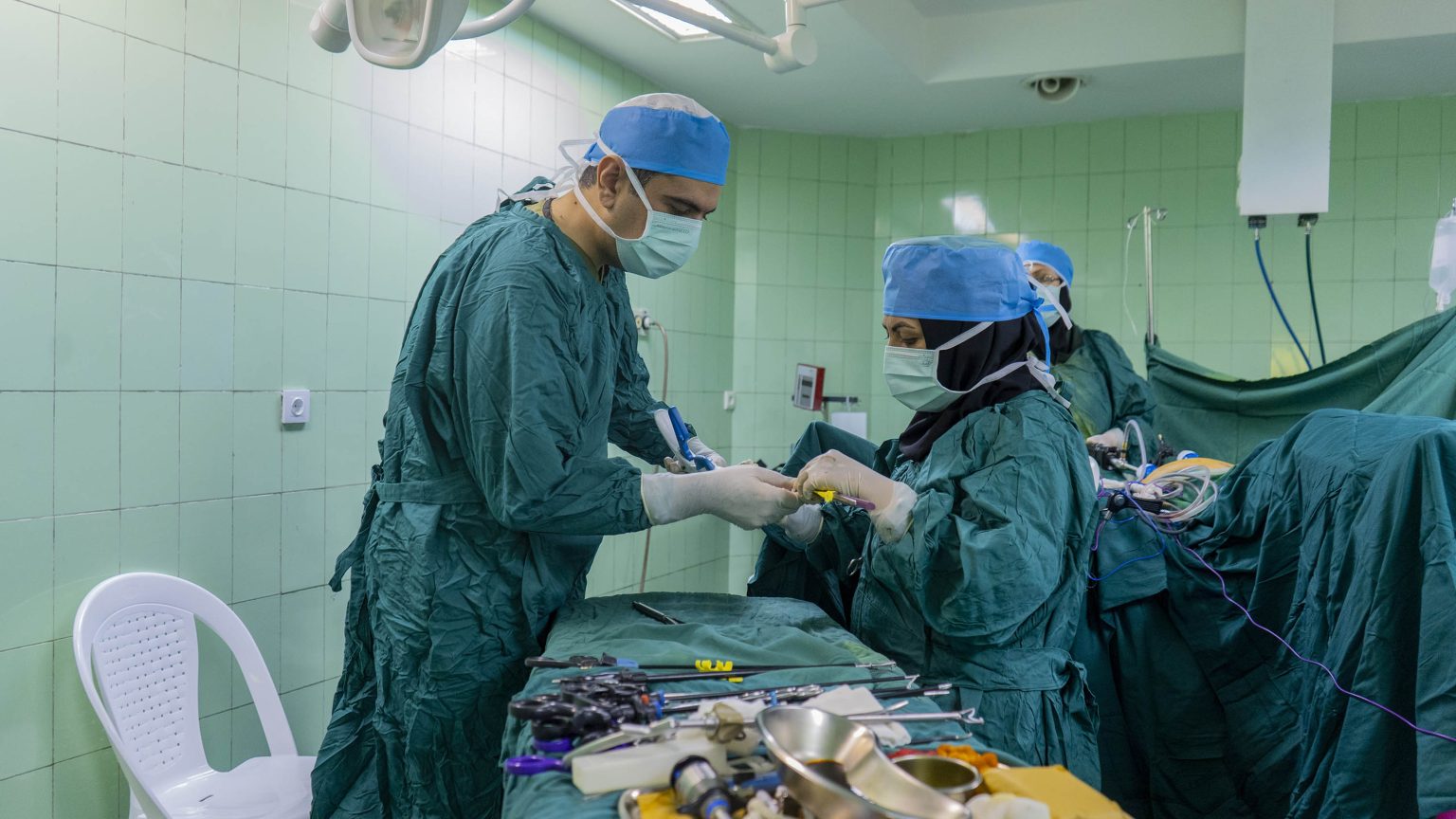
Laparoscopic bowel surgeries at Nimeh Shaaban Hospital in Kerman are performed by an experienced team using up-to-date equipment. For consultation and appointment booking, please contact us.
Laparoscopic surgery of the large intestine is one of the methods used to treat bowel-related diseases, including the treatment and removal of benign and malignant tumors in the intestine. Bowel surgery can be performed using either laparoscopic or open surgery methods. The laparoscopic method causes less pain and bleeding, and the incision on the abdomen is very small. Laparoscopic bowel surgery is an effective method for preventing the spread of colon cancer to other parts of the body.
What is Laparoscopy?
Laparoscopy is a surgical method used for diagnosing and treating diseases, but it has fewer complications compared to traditional surgery. Thanks to the modern and up-to-date equipment available at Nimeh Shaaban Hospital in Kerman, and the presence of experienced doctors such as Dr. Rezazadeh, it is possible to perform various types of bowel surgeries laparoscopically with minimal complications.
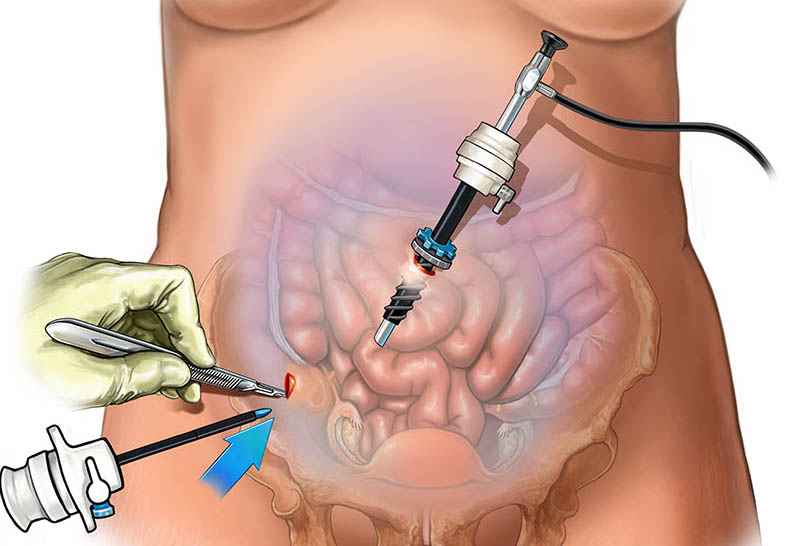
Laparoscopic surgery is performed using a device called a laparoscope. A laparoscope is a thin instrument with a small camera. A small incision is made in the target area, through which the internal organs of the abdomen can be examined. After evaluation, the surgeon can, if necessary, correct internal tissues or remove a part of them.
Laparoscopic Colon Polyp Removal
Benign colon polyps that cannot be treated by colonoscopy are removed via laparoscopic bowel surgery. Colon polyps are growths on the wall of the large intestine that are usually non-cancerous, although some may become malignant. In most cases, colon polyps are removed using colonoscopy. However, when removal by colonoscopy is not possible, the polyp is removed through a small incision in the abdominal wall using a laparoscope.
Total Colectomy Surgery
Colectomy is a surgical procedure to remove all (total colectomy) or part of the large intestine. The colon, or large intestine, is a large tubular organ at the end of the digestive tract. Surgeons may perform colectomy to treat the following conditions:
- Colon cancer
- Gastrointestinal disorders
- Colon obstruction
- Colon injury
Laparoscopic Colectomy
Laparoscopic colectomy, also known as minimally invasive colectomy, involves creating several small incisions in the abdomen. The surgeon inserts a small camera through one incision and surgical instruments through the other incisions. While viewing the images on a monitor, the surgeon uses the tools to free the colon from surrounding tissues. The large intestine is then brought out through one of the small incisions, allowing for extracorporeal surgery. After the procedure, the surgeon returns the colon through the incision back into the abdomen.
Laparoscopic colectomy reduces pain and recovery time after surgery, but not everyone is a suitable candidate for this procedure. In some cases, the surgery may start laparoscopically but needs to be converted to an open colectomy due to specific conditions. Once the colon is repaired or removed, the surgeon reconnects the digestive organs to restore normal waste elimination.
The first laparoscopic total colectomy at Nimeh Shaaban Hospital in Kerman was performed by Dr. Mohammad Rezazadeh. You can watch the surgeon’s explanation of this procedure on Aparat (in Persian).
Other Conditions Treatable by Laparoscopic Bowel Surgery
- Urinary and fecal incontinence
- Ulcerative colitis
- Rectal cancer
- Rectal prolapse
- Intestinal obstruction and adhesions
How Laparoscopic Surgery is Performed
The first step in laparoscopy is anesthesia, which can be general or local based on the anesthesiologist’s recommendation. Several small incisions are made in the abdominal area. The surgeon then inserts the laparoscope, which is equipped with a camera, into the incisions. The target area is displayed on a monitor, and necessary procedures are carried out. If tissue sampling or correction is needed, the surgeon performs it accordingly.
Advantages of Laparoscopic Bowel Surgery
- Laparoscopic surgery is a safe, low-risk, and minimally invasive procedure with a short recovery period.
- The surgeon can fully visualize the surgical area on the monitor, reducing tissue damage.
- Laparoscopic bowel surgery has minimal complications.
- The risk of scarring is greatly reduced due to the small incisions.
- The likelihood of infection is very low because the abdominal incisions are small.
- Patients experience minimal pain and have a short hospital stay.
- Recovery is quick, allowing patients to resume daily activities shortly after surgery.
You can watch an interview with a patient who had colon cancer surgery at Nimeh Shaaban Hospital on Aparat (in Persian).
As mentioned, laparoscopic bowel surgery is a safe and low-risk method that allows for disease diagnosis, treatment, correction of intestinal defects, and prevention of tumor spread to other areas of the body.